What poker taught me about life that you cannot learn anywhere else
11 May 2011, Casino Gran Madrid, EPT Grand Final tournament. €10k buy-in and €1,500,000 for the winner. After battling for four long days, each 11 hours long, playing some of my best-ever poker and, of course, getting lucky, I found myself leading the tournament with only 11 of the 686 entrants remaining. Plus, I was one of the stronger players at my table.
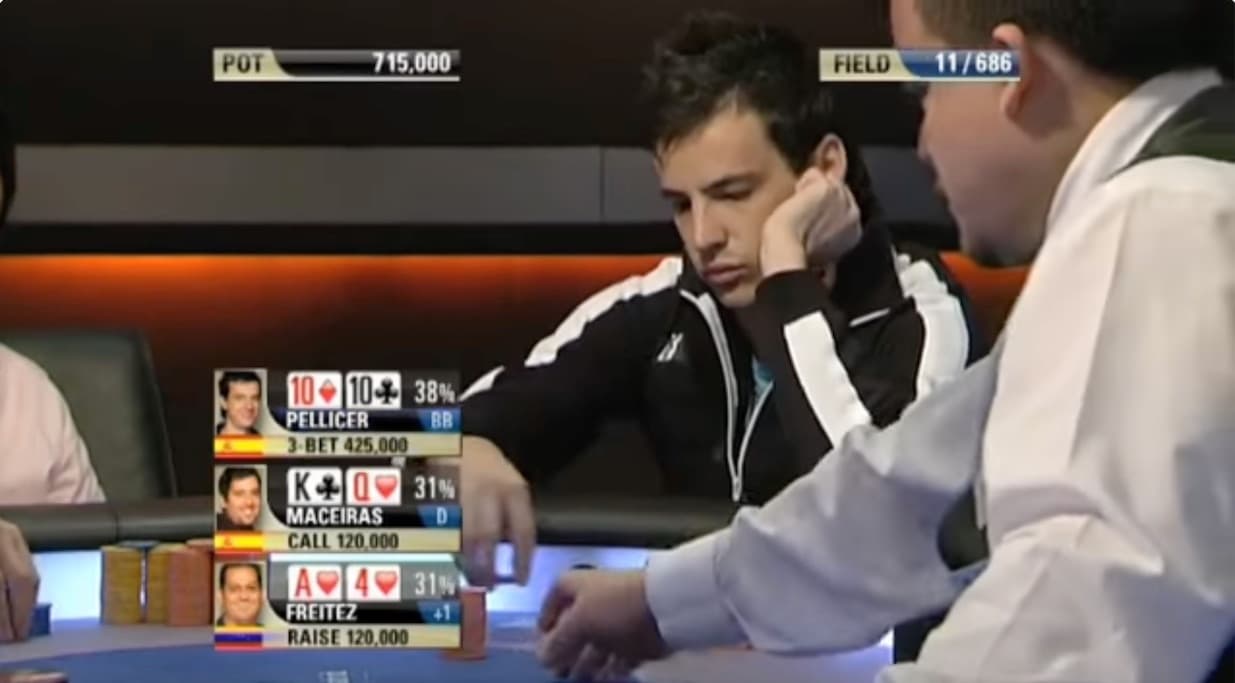
Spanish national TV is doing interviews with me. I am on the noon TV news. Two thousand new followers on Twitter. The tournament crew is taking videos of me like a football player. After two or three hours of playing, and having won some pots and lost some, I had a huge hand against the second in chips, who was a Venezuelan amateur player. We went all-in for half of the chips in the tournament. The hand is worth, in expected value, €800,000.
My pocket tens did look very good preflop. I was a huge favorite (66% winning odds on the broadcast) against my opponent's loose play with ace-four of hearts. We will never know if he thought he had aces. In any case, the flop came, and he shouted, “Two aces en el flop,” to his friends on the rail. The turn and river didn’t help me. I lost the rest of my stack shortly after, ATs vs AJo. He became the mega chip leader and did indeed go on to win the tournament, at a very controversial final table.
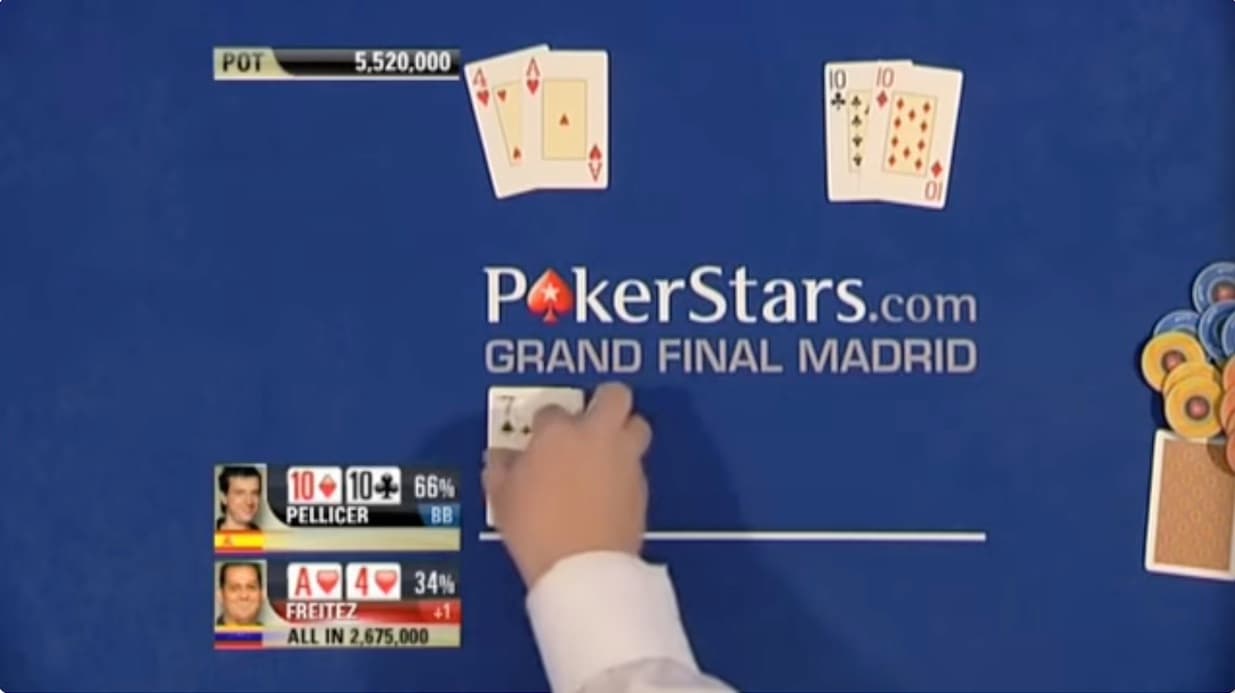
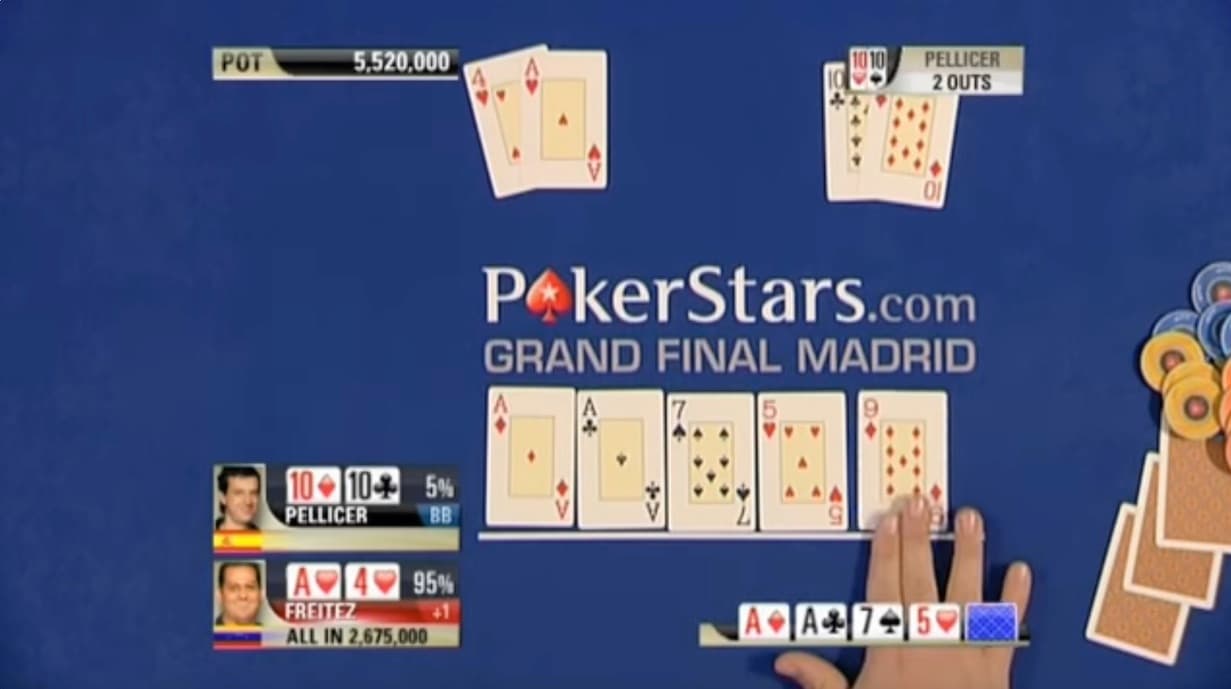
I did everything right; he did everything wrong. But the outcomes were flipped: I was out, and he went on to win the tournament and the €1.5m.
As the professional player I was, was I happy about the outcome? No. I could not sleep for many nights, and the thought of this hand visited me at least once a day for years.
But more importantly, was I happy with the process? You bet I was. I made the right decisions; I did the right things. I was not afraid to take the risk when it had to be taken. I proved that I belonged there, especially to myself, amid the sea of doubts that invariably comes with the early years of a poker career. Even when it was tempting to think “I should have not taken that risk” I didn’t. I stayed strong in this life changing situation.
Not even one month later, I moved to England to improve my poker career. I started studying harder, playing more, taking it more seriously than ever, and went on to have one of my best years. I final-tabled almost all the majors on PokerStars and achieved Supernova Elite status one more time. This year defined my career and catapulted me from an average professional to a top 1% professional. Long term, at the end of my career, all the outcomes were good because many decisions were good.
As for my opponent, who made bad decisions then, even if he achieved the favorable short-term outcome, I will leave it to your imagination how long money, and luck, stayed with him.
Trust the process. Make the right decisions. The outcome is guaranteed, just only in the long term. Just maybe not in the same way you imagined.
Just as in poker, life will hand you incomplete information all the time. You need to make your decisions with the information available. You make the best decision you can with the information you have. Then, when information changes, you might realize that you did not, in fact, make the right decision according to the new information.
This is one of the conflicting truths I see that are very difficult to grasp for people outside poker, sports betting, and finance. If you made a good decision, and sometimes it turns out to be a bad decision, must it have been a bad decision? No, if you follow the right process.
Unlike in poker, in life you can always gather a bit more information. Ask someone else. Read another book. Check the instructions again. Calculate contingencies. But if you do everything you reasonably can, make the decision, and then something completely out of your control happens, putting you in a bad spot, it was still a good decision (with the information available at the time). Retrospective analysis must always be done for learning, but never for judging.
Let’s say you want to move to Europe. The goal is to get a passport for you and your family. After consulting, reading, investigating, and researching, you decide to relocate to Portugal on a golden visa. You move there, life is good, the sun is shining. A passport is promised by the government in five years.
Then you experience delay after delay. Paperwork is complicated, and your agent makes a mistake costing you one year. Then the Portuguese government changes, and the newly appointed party decides to change the five years to ten. Not only that, but they make the unprecedented decision not to grandfather the golden visa system. You see your goals are now nine years away. Did you make the wrong decision?
Not really. Your outcome was not what you expected. But your calculation was right. Risk reward was there. Unpredictable factors out of your control occurred and changed your reality. Make sure that you are able to hold these two conflicting truths together. And in the meantime, enjoy the sun and the sardines :)
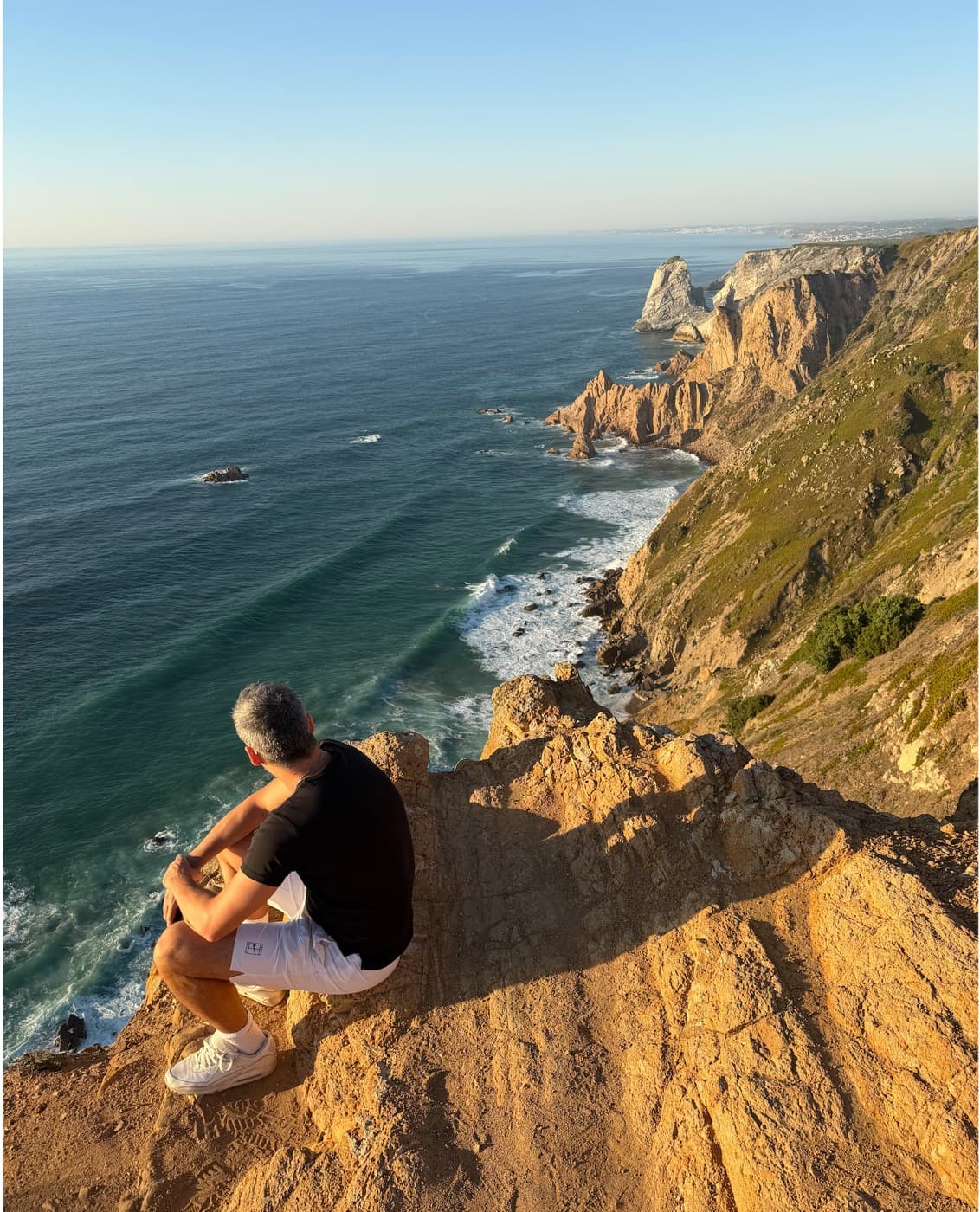
But at the same time, it’s very important to understand that nothing, absolutely nothing, not even tomorrow, is 100% certain. When something is offered with 100% certainty, always take it with a pinch of salt.
Uncertainty is the price of competence. Losing sometimes is the price of doing business. For a high-agency person, which most of you reading this long text will be, many times things will not go the desired way. Simply because you will try a lot of things. And no one has a 100% success rate. Not everything we do is meant to work or be a success. You need to be able to embrace uncertainty to some degree. Make decisions within ranges; accept potential bad outcomes. As a poker player would do. If you will only settle for (perceived) complete certainty, life will not be as rewarding as it could be for you.
And yet, as long as we review our thinking process, learn from our mistakes, draw the right lessons from defeats, and continue a never-ending process of self-improvement and process improvement, we will go on making better decisions, which will inevitably lead to better outcomes.
Why did I choose this example, and why will I use many more non-poker examples? Because the biggest pots you will play are not at the poker table. Decisions at the poker table are an extension of the work outside the poker table: studying the game, studying yourself and your opponents, learning the statistics, keeping yourself healthy, finding good habits, learning the extreme discipline needed for this game, getting the required rest, finding ways to balance your life. Sounds like life? Yes, because it is.
Your life is the biggest game you will ever play. Body, mind, finances, self-improvement, fulfillment, and professional success are all moving pieces of the biggest game, which is life.
Yet most people don’t treat life like that, ignoring most of these pillars and living on autopilot, never coming close to reaching their full potential.
What’s the point of building Sovereign HNI?
I want to provide you with all the information that a poker player cannot enjoy in a game of incomplete information. As a former poker player, I understand better than anyone what information is worth. Every extra little piece of information is huge leverage for making better decisions.
It starts with helping you understand what you have (net-worth tracker). Learning to project your future gains in an innovative way that I have never seen anyone using. Showing you how much you will pay in taxes and how it would change in different places. Helping you to be a sovereign individual who is not owned by any government. Giving you tips on how to be more free and get more optionality. Giving you a super powerful note system (second brain) that will help you hold your thoughts, with the ability to literally talk to it or chat.
The more Sovereign HNI knows about you, the better the insights it will give you on the Monitor, which feeds off the information you’ve given it.
Finally, I want you to know how other HNIs, or especially pre-HNIs, play the game.
Not only the money game — the sovereignty game, the relocation game, the information game, the self-organization game, the lifestyle game.
The Only Game.
This article is the author's own experience and opinion. It is not financial, tax, legal or investment advice.